Making people stay awake for hours in a hospital may seem an odd way to battle depression – but for some people it is proving a promising therapy. Linda Geddes reports.
The first sign that something is happening is Angelina’s hands. As she chats to the nurse in Italian, she begins to gesticulate, jabbing, moulding and circling the...read more...
Three-fifths of new cars must be electric by 2030 to meet greenhouse gas targets, ministers have been warned.
Homes also need to be built to a higher standard, the Committee on Climate Change - the official watchdog - says.
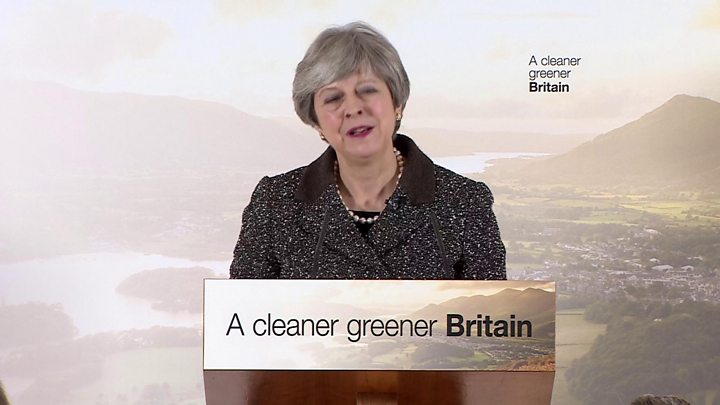
The government says the UK is cutting emissions faster than any other G7 nation - and the committee agrees there has been a big shift under Theresa May.
However, it says the UK will fall short of its ambitions unless ministers do more to turn pledges into reality.
The committee agrees the government's recently-published Clean Growth Plan is a big improvement, and says the UK has been a world leader in cutting emissions so far.
But it argues that the plan still doesn't offer detailed policies to meet legal carbon targets.
Carbon capture from industry must be made to happen, it says, and wood and plastics should be banned from landfill in order to re-use them.
More trees should be planted to soak up carbon dioxide, with a view to creating 70,000 hectares (173,000 acres) of new woodland by 2025, and farming must do more to cut emissions.
'Major change'
Industry, too, is urged to take greater responsibility.
The committee's chairman Lord Deben, told BBC News: "If you're going to sell an electric car your dealers have got to understand these things, so training dealers is essential.
"If you're running a big fossil fuel company, you have to start thinking about the realities of when, not if, because it is not if any longer, we use a lot less fossil fuels."
He also criticised construction firms for only doing the "absolute minimum" required on building energy efficient homes.
The committee points out that better insulated homes would cut people's bills as well as tackle climate change, and calls for more incentives to encourage "able to pay" households to install efficiency measures.
Lord Deben said the Clean Growth Strategy had "changed the tone" of the government on the issue.
"These issues have been put into the centre of government policy - that's a major change."
"The strategy doesn't deliver enough action to meet emissions targets in the 2020s and 2030s," he said.
"The government's policies will need to be firmed up as a matter of urgency and supplemented with additional measures if the UK is to deliver on legal commitments and secure its position as an international climate change leader."
He added: "All departments now need to look at their contribution towards cutting emissions - including the Department for Transport."
The committee wants 30% to 70% of new cars to be ultra-low emission by 2030, as well as up to 40% of new vans, as part of efforts to phase out sales of conventional petrol and diesel versions by 2040.
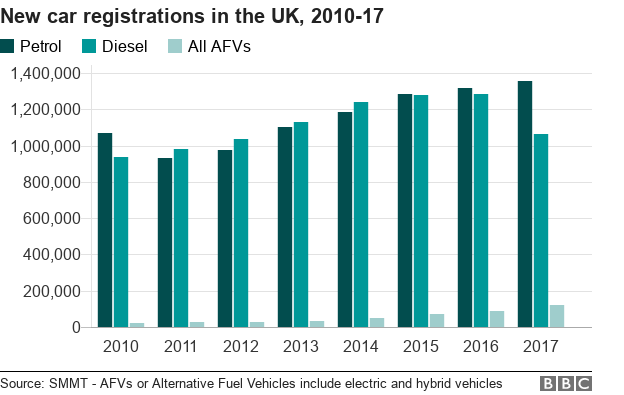
Currently, fewer than 5% of new car sales are "alternatively fuelled", which also includes hybrid models.
Prof Michael Grubb, from University College London, said: "There are plenty of good ideas out there on low-carbon energy, cutting emissions from buildings, clean transport and more, but as the committee rightly points out, concrete plans need to be put in place, and soon.
"The government is making all the right noises on support for the low-carbon economy, but these must be turned into action: we need a year of decision-making."
Richard Black, from the Energy and Climate Intelligence Unit, agreed: "We're not on track to meet emissions goals that kick in in just five years' time.
"That leaves ministers little time for enquiries and consultations - they're going to have to put new policies in place fast."
Mr Black suggested quick-win policies including: cutting company car tax for electric vehicles; repealing the ban on onshore wind power (the cheapest form of electricity generation), and re-starting the programme for Zero Carbon Homes.
'Ambitious'
A business department spokesperson said: "The scrutiny of the independent Committee on Climate Change plays an important role.
"The UK has reduced emissions on a per-person basis faster than any other G7 nation, and our clean growth strategy is the next ambitious milestone in our work to de-carbonise the UK.
"We have always said it is only the start of a process.
"Our proposals will continue to evolve - whether in response to costs of renewable energy coming down, improved evidence about climate change, wider trends in technology or the economic opportunities delivered through our industrial strategy."
By Roger HarrabinBBC environment analystsee more..
The US astronaut Jeanette Epps has been removed from her upcoming mission to the International Space Station (ISS) just months before launch.
Dr Epps was to have been the first African-American astronaut assigned to the space station crew.
She would have flown aboard a Russian Soyuz flight in June but is being replaced by another astronaut.
Nasa has not given a reason for withdrawing her but says she will be considered for future missions.
Jeanette Epps, born in Syracuse, completed a doctorate in aerospace engineering in 2000. After graduating, she worked in a laboratory for two years before being recruited by the Central Intelligence Agency (CIA).
She worked as a technical intelligence officer for seven years before being selected as a member of Nasa's 2009 astronaut class. Her time with the CIA included deployments to Iraq.
The Syracuse-born astronaut was to have flown to the space station in June
Dr Epps will be replaced by Serena Auñón-Chancellor, who has worked with space station crew members in Russia
In an interview with Elle magazine last year, Dr Epps said: "I get very excited when I think about being up in space, partly because I compare it to going into a war zone.
"Both are very dangerous but, for me, it's a no-brainer: I would rather face the dangers in space than go back to a war zone."
She added: "When people come back from space, I see how much they want to go again."
Dr Epps was due to launch to the orbiting outpost from Baikonur, Kazakhstan, along with the German European Space Agency (Esa) astronaut Alexander Gerst and the flight's commander, Russian cosmonaut Sergei Prokopev.
Her replacement, Serena Auñón-Chancellor, is a medical doctor from Fort Collins, Colorado. Dr Auñón-Chancellor previously spent more than nine months in Russia supporting medical operations for space station crew members.
The CancerSEEK test looks for mutations in 16 genes that regularly arise in cancer and eight proteins that are often released.
It was trialled on 1,005 patients with cancers in the ovary, liver, stomach, pancreas, oesophagus, colon, lung or breast that had not yet spread to other tissues.
Overall, the test found 70% of the cancers.
Dr Cristian Tomasetti, from Johns Hopkins University School of Medicine, told the BBC: "This field of early detection is critical.
"I think this can have an enormous impact on cancer mortality."
The earlier a cancer is found, the greater the chance of being able to treat it.
Five of the eight cancers investigated have no screening programmes for early detection.
Finding tumours when they could still be surgically removed would be "a night and day difference" for survival, said Dr Tomasetti.
CancerSEEK is now being trialled in people who have not been diagnosed with cancer.
This will be the real test of its usefulness.
The hope is it can complement other screening tools such as mammograms for breast cancer and colonoscopies for colorectal cancer.
Dr Tomasetti told the BBC: "We envision a blood test we could use once a year."
Universal test?
The CancerSEEK test, reported in the journal Science, is novel because it hunts for both the mutated DNA and the proteins.
Increasing the number of mutations and proteins being analysed would allow it to test for a wider range of cancers.
Dr Gert Attard, team leader in the Centre for Evolution and Cancer at the Institute of Cancer Research, London, and consultant medical oncologist at the Royal Marsden NHS Foundation Trust, told the BBC: "This is of massive potential.
"I'm enormously excited. This is the Holy Grail - a blood test to diagnose cancer without all the other procedures like scans or colonoscopy."
He said "we're very close" to using blood tests to screen for cancer as "we have the technology".
But he cautioned there was still uncertainty about what to do when a cancer was diagnosed.
In some cases, the treatment may be worse than living with a cancer that is not immediately life-threatening.
Men can already have slow growing prostate cancers closely monitored rather than treated.
"When we detect cancer in a different way, we can't take for granted that everyone will need treatment," Dr Attard said.
Paul Pharoah, professor of cancer epidemiology at the University of Cambridge, said more work was needed to assess how the test performs when cancers are less advanced.
He said: "Demonstrating that a test can detect advanced cancers does not mean that the test will be useful in detecting early stage symptomatic cancer, much less pre-symptomatic cancer. The sensitivity for the stage 1 cancers in the study was only 40%."
The cost of CancerSEEK is less than $500 (£360) per patient, which is around the same price as a colonoscopy.
Strange Star Helps Discover Inactive Black Hole 4 Times The Mass Of Sun
London: Scientists have for the first time discovered an invisible, inactive black hole - about four times the mass of the Sun - by observing strange star orbiting it.
This is the first such inactive stellar-mass black hole found in a globular star cluster, researchers said.
The discovery impacts our understanding of the formation of these star clusters, black holes, and the origins of gravitational wave events.
Globular star clusters are huge spheres of tens of thousands of stars that orbit most galaxies. They are among the oldest known stellar systems in the Universe and date back to near the beginning of galaxy growth and evolution. More than 150 are currently known to belong to the Milky Way.
One particular cluster called NGC 3201, situated in the southern constellation of Vela, has been studied using the MUSE instrument on European Southern Observatory (ESO)'s Very Large Telescope in Chile.
Researchers found that one of the stars in NGC 3201 is behaving very oddly.
It is being flung backwards and forwards at speeds of several hundred thousand kilometres per hour, with the pattern repeating every 167 days.
"It was orbiting something that was completely invisible, which had a mass more than four times the Sun - this could only be a black hole! The first one found in a globular cluster by directly observing its gravitational pull," said Benjamin Giesers from ESO.
The relationship between black holes and globular clusters is an important but mysterious one.
Due to their large masses and great ages, these clusters are thought to have produced a large number of stellar-mass black holes - created as massive stars within them exploded and collapsed over the long lifetime of the cluster.
ESO's MUSE instrument provides astronomers with a unique ability to measure the motions of thousands of far away stars at the same time.
With this new finding, the team have for the first time been able to detect an inactive black hole at the heart of a globular cluster - one that is not currently swallowing matter and is not surrounded by a glowing disc of gas.
They could estimate the black hole's mass through the movements of a star caught up in its enormous gravitational pull.
From its observed properties the star was determined to be about 0.8 times the mass of our Sun, and the mass of its mysterious counterpart was calculated at around 4.36 times the Sun's mass - almost certainly a black hole.